
Euphoria is a poor advisor — diversification remains the wisest choice.

AI: Bubble or New Wave of Growth?
Euphoria is a poor advisor — diversification remains the wisest choice.
In a nutshell
Artificial Intelligence is capturing both capital and imagination. The inevitable question arises: are we in a dot-com-style bubble? The short answer: not in the same way. But euphoria is a poor advisor — diversification remains the wisest choice.
A necessary flashback: what the dot-com bubble really was
In the late 1990s, the Internet promised to rewrite everything. Stock prices surged ahead of profits: investors paid for companies with no solid revenues and unproven business models. Between 1995 and March 2000, the Nasdaq soared; between 2000 and October 2002, it lost over 80%, while the S&P 500 was cut in half. The core issue? Valuations disconnected from the ability to generate earnings.
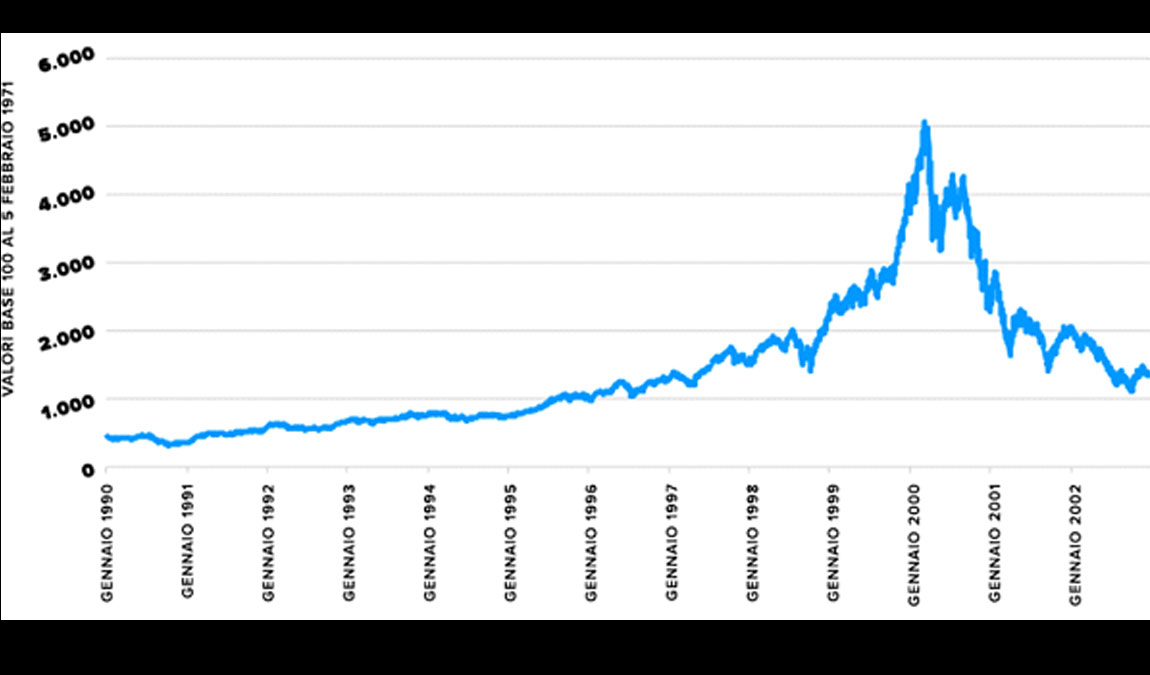
Figure 1 — Nasdaq Composite: boom and crash, 1990–2002. Source: Nasdaq OMX Group via FRED.
Today: Why AI Is Different (Even If the Enthusiasm Feels Similar)
The current cycle is driven by a small core of highly profitable giants (Alphabet, Amazon, Apple, Meta, Microsoft, Nvidia). From the October 12, 2022 low to the late September 2025 highs, the S&P 500 has neared 6,700 points — about +87% with normal corrections along the way. Impressive numbers, but still far from the excesses of the late 1990s.
Valuations Compared
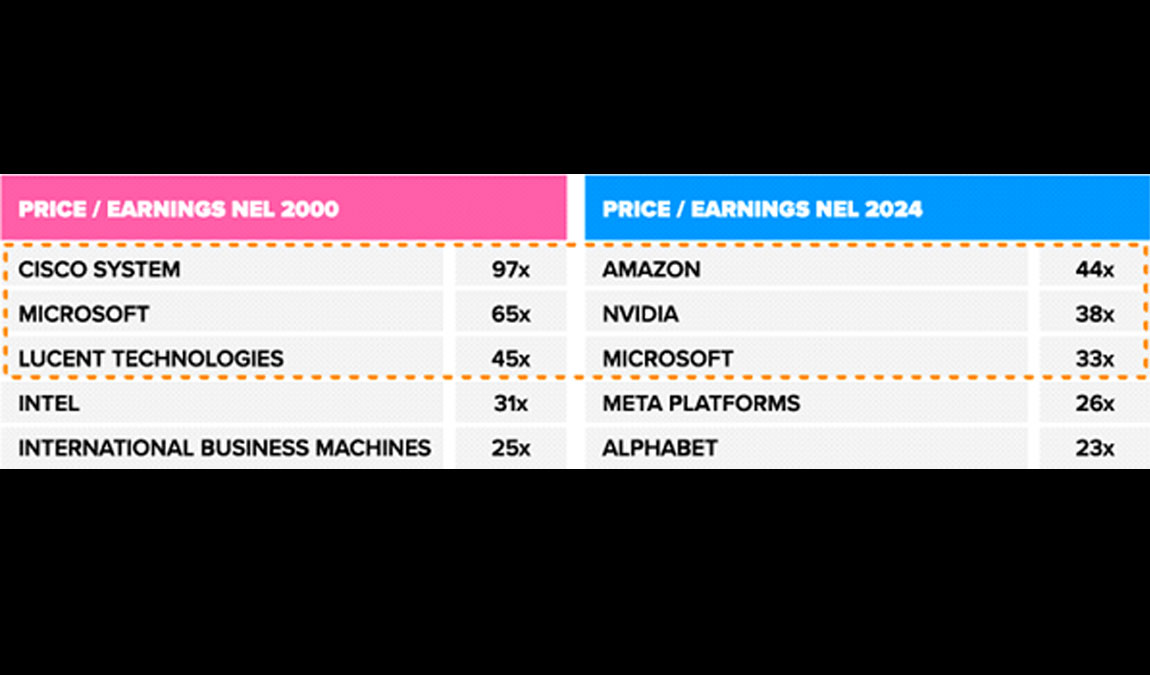
Back then, the Nasdaq reached a Price/Earnings ratio of around 90. Today, while multiples are stretched for some AI-related names, they are generally lower and supported by stronger earnings prospects.
2025 update (indicative, specify forward/trailing):
Nvidia 53x, Amazon 34x, Microsoft 38x, Meta 26x, Alphabet 26x.
|
Società |
P/E 2025 |
|
Nvidia |
53x |
|
Amazon |
34x |
|
Microsoft |
38x |
|
Meta |
26x |
|
Alphabet |
26x |
Where the pitfalls lie
• Timing: as with the Internet, AI adoption may prove more gradual than what current prices imply.
• Natural selection: not all AI projects will become profitable businesses; distinguishing models with real earnings and cash flow will be crucial.
• Concentration: the market is driven by a few mega-caps; any slowdown in earnings could amplify volatility.
Diversification: the lesson from the dot-com bubble
The dot-com bubble didn’t kill the Internet — it wiped out fragile business models and left behind the digital infrastructure on which AI now runs. A diversified portfolio held up better back then and will continue to do so today. The comparison between the broader S&P 500 and the more concentrated Nasdaq during 1995–2002 is telling
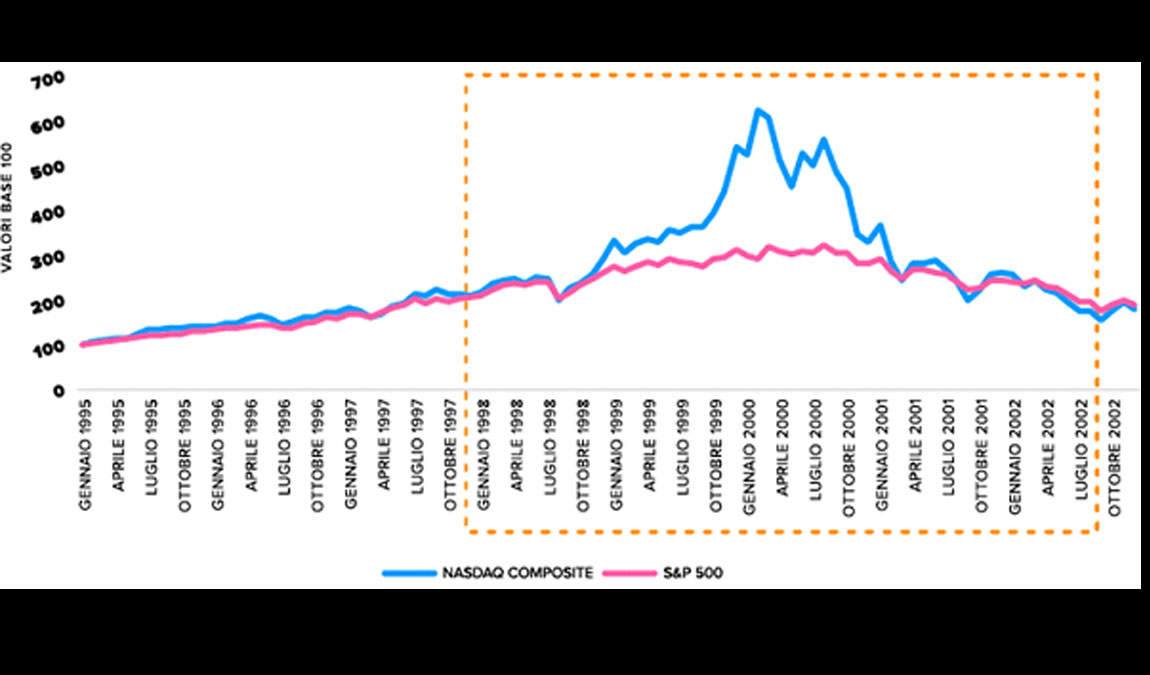
Figura 4 — S&P 500 vs Nasdaq Composite (ribase = 100), 1995–2002. Fonte: Nasdaq OMX Group via FRED.
Operational Guidelines
Methodological Notes and Sources
• Indices: Nasdaq Composite and S&P 500 (Nasdaq OMX Group via FRED; Investing.com).
• Valuations: estimates from JP Morgan and FactSet (March 2024) and 2025 updates integrated in the table.
Disclaimer
Informational material only: does not constitute financial advice or an investment solicitation. Past performance is not indicative of future results.
© 4FT Invest LTD. All rights reserved
