
Conflicting news and persistent tensions drive equities, oil, and gold in a week of high volatility
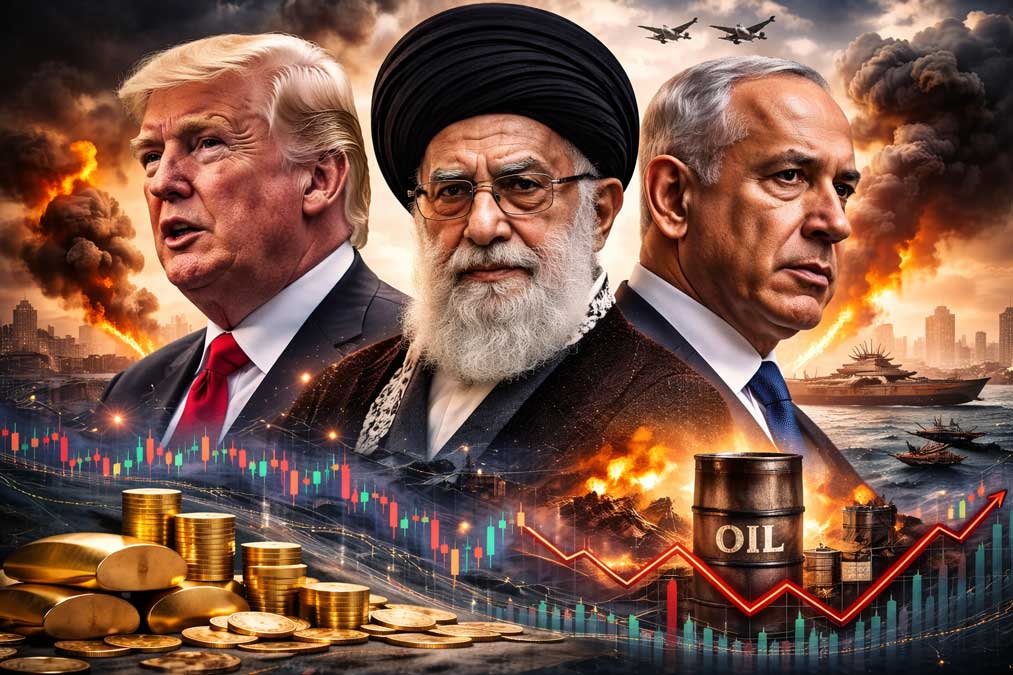
Iran: Fragile Truce, Nervous Markets
Conflicting news and persistent tensions drive equities, oil, and gold in a week of high volatility
The past week has been one of the most confusing and potentially critical periods in recent months on the Middle Eastern front. Between rumors of imminent truces, denials, diplomatic misunderstandings, and new attacks, the confrontation between the United States, Iran, and Israel has kept global financial markets in a constant state of tension.
A week of conflicting news
According to various reports that emerged in recent days, a diplomatic opening appeared to take shape, involving multiple regional and international actors. Sources also reported by Adnkronos اشاره contacts and behind-the-scenes efforts linked to a possible truce, with internal pressure within Iran and signs of conditional openness.
At the same time, analyses such as the one published by 4ftinvest outlined three possible scenarios: military escalation, prolonged stalemate, or negotiated de-escalation. However, throughout the week, markets continuously shifted between these three possibilities without ever finding a clear direction.
What made the situation even more surreal was the now emblematic case of the alleged halt to bombings in Lebanon. Initially interpreted as part of a broader agreement, the news was later scaled back: it turned out to be an operational and communication misunderstanding between the parties.
A detail? Quite the opposite. In negotiations of this magnitude, overlooking or misinterpreting such crucial elements is, at the very least, paradoxical—and the markets reflected this with extreme volatility.
The reality on the ground: escalation continues
Beyond diplomatic speculation, the actual situation remains very different:
This is particularly significant, as it directly impacts global energy flows and represents one of the main drivers of market movements in recent sessions.
Impact on US equity markets
Major US indices experienced a highly volatile week:
The pattern was clear: every hint of a potential truce triggered rebounds, while each denial or escalation led to rapid sell-offs.
Commodities: oil and gold in focus
Commodities proved to be the most immediate barometer of the crisis:
In both cases, price movements were driven more by news flow than by underlying fundamentals, with sharp spikes followed by equally rapid corrections.
Conclusion: between narrative and reality
The week highlighted a key element: the growing gap between narrative and operational reality.
On one side, reports of truces and negotiations.
On the other, ongoing bombings and one of the world’s most critical energy chokepoints still effectively blocked.
In between, markets moving on informational impulses, often amplifying errors, misunderstandings, and incomplete communication.
And perhaps this is the most important takeaway: in a context where even a “misunderstanding” can move billions, the management of information becomes just as important as the events themselves.
© 4FT Invest LTD. All rights reserved
