Stocks slow, bonds reflect uncertainty, commodities rally and crypto as an alternative safe haven
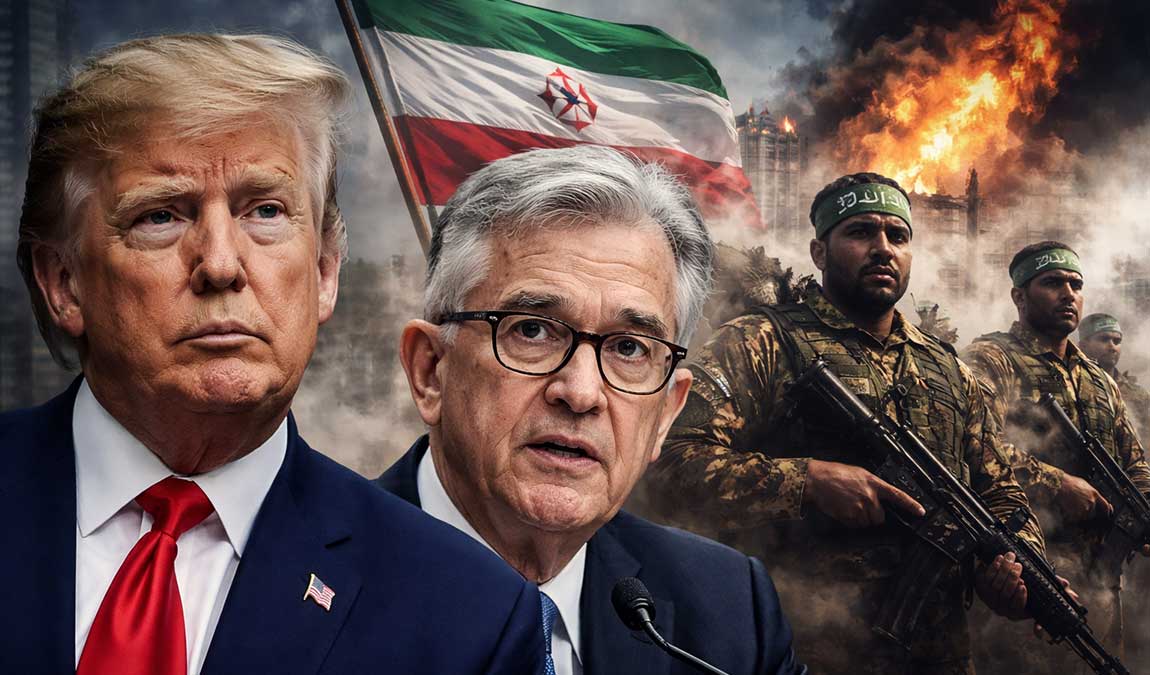
Markets Open Uncertain Amid Geopolitics and the Powell Probe
Stocks slow, bonds reflect uncertainty, commodities rally and crypto as an alternative safe haven
The start of the trading week for financial markets – from Monday, January 12, 2026 – showed a mixed picture, dominated by geopolitical pressures and an unexpected wave of political uncertainty in the United States. Investors are navigating concerns over monetary policy, international tensions and a general caution toward risk assets.
Equities and global markets
Major European equity indices opened the week in negative or flat territory, with the FTSE MIB, DAX and CAC 40 all slightly lower at the start of trading in the Old Continent. On Wall Street, S&P 500, Dow Jones and Nasdaq futures were weak following emerging doubts about the independence of the Federal Reserve, triggered by a criminal investigation involving Fed Chair Jerome Powell. Sentiment was further weighed down ahead of U.S. inflation data and the start of the bank earnings season.
Bonds and currencies
The bond market reacted with moderate volatility: long-term U.S. yields showed tension, reflecting a possible reassessment of rate expectations. Treasury futures still point to bets on stable or slightly lower rates, while the U.S. dollar continued to weaken amid political concerns, with the euro and Swiss franc among the best-performing currencies.
Commodities in rally
Commodities stood out: gold and silver reached new record highs, driven by safe-haven demand in a context of political and geopolitical risk. Oil also maintained a positive tone, with Brent and WTI supported by concerns over potential supply disruptions, particularly linked to tensions in Iran and prospects for a reshaping of Venezuelan exports following U.S. intervention in the country.
₿ Crypto: an alternative safe haven
Cryptocurrencies showed decent resilience: Bitcoin and Ethereum edged higher despite risk aversion in traditional markets, suggesting that some investors are treating digital assets as potential hedges against macroeconomic uncertainty.
Geopolitical backdrop
Geopolitical factors are playing an increasingly central role in asset allocation:
Multi-asset ETFs: concrete tools for a balanced portfolio
In a market phase marked by high geopolitical uncertainty and questions surrounding monetary policy, the use of well-diversified, low-cost ETFs allows investors to build robust portfolios without excessive complexity. Below are examples of instruments commonly used in a strategic allocation framework.
In this environment, a prudent yet diversification-oriented portfolio construction may rely on multi-asset ETFs combining exposure to different asset classes. Here are some global strategy ideas, taking into account moderate volatility and risk protection.
Global equities (growth engine)
For the core equity allocation, global exposure remains the most efficient choice:
Global bonds (stability and income)
To reduce overall volatility and stabilize the portfolio:
Inflation and geopolitical risk protection
In the presence of tensions in energy and commodities:
Commodities (real diversification)
To benefit from supply shocks and commodity cycles:
“Ready-made” multi-asset solutions
For investors seeking a simpler, more automated approach:
Extra: regulated crypto exposure
Only for investors with high risk tolerance:
In summary
In a context shaped by Ukraine, the Middle East, U.S. political instability and new geopolitical fractures, building a portfolio through liquid, global and well-diversified ETFs remains one of the most effective strategies to manage risk without sacrificing long-term returns.
This article is provided for informational purposes only and does not constitute financial advice, nor an offer or solicitation to invest. The assessments expressed reflect general market opinions and do not take into account individual circumstances. All investments involve risks, including the possible loss of invested capital.
© 4FT Invest LTD. All rights reserved
