Global Markets Accelerate:Equities,Bonds & Commodities
Optimism over US-China deals, Fed rate cut and ECB outlook drive global assets and capital flows
Global Markets Accelerate: Equities, Bonds and Commodities
Optimism over US-China deals, Fed rate cut and ECB outlook drive global assets and capital flows
Market Overview
Equities
- Global equity markets performed well this week, supported by optimism surrounding the Federal Reserve’s (Fed) decisions and the easing of trade tensions between the United States and China. For example, the S&P 500 rose by around 1–2%, while the Nasdaq Composite gained about 1.8%.
- Emerging markets outperformed in some regions, benefiting from hopes of economic recovery and more favorable monetary conditions.
- However, part of the optimism was tempered after the Fed reassured markets but also warned that further rate cuts might proceed more gradually than expected.
Bonds
- On the bond front, the Fed’s rate cut led to a decline in some government yields—or at least reinforced the idea that monetary policy may remain less restrictive. Gold also gained in response to the rate cut.
- However—and this is key—the Fed maintained a cautious tone, suggesting that the rate-cutting cycle may not continue aggressively, which prompted some reassessment in fixed-income markets.
- In this context, short-term bonds and inflation-linked securities have been highlighted by analysts as relatively more attractive segments.
Commodities
- Commodities showed mixed performances:
- Oil (e.g., Brent crude) remained broadly stable around USD 65 per barrel, as investors assessed the potential impact of the US-China truce on trade and global demand.
- Gold strengthened, supported by expectations of lower rates and persistent geopolitical and trade uncertainty.
- Growth-linked commodities such as copper and industrial metals benefited from optimism over improving global demand and renewed cooperation between major economies.
Key News and Events
Federal Reserve (Fed)
The Fed cut rates by about 25 basis points, confirming market expectations for some easing. However, it cautioned that further cuts were not guaranteed in the near term—moderating investor enthusiasm.
This dual message (rate cut but cautious tone) showed that while monetary easing is underway, it may not be as aggressive as some investors had hoped.
European Central Bank (ECB)
Although no official decisions were made this week, markets are closely watching the ECB, which may soon signal the end of its easing cycle—or even a mild tightening—if inflation pressures persist. Analysts note that Europe’s economic backdrop remains more fragile than that of the United States, making European rates a critical factor to watch.
US-China Agreement
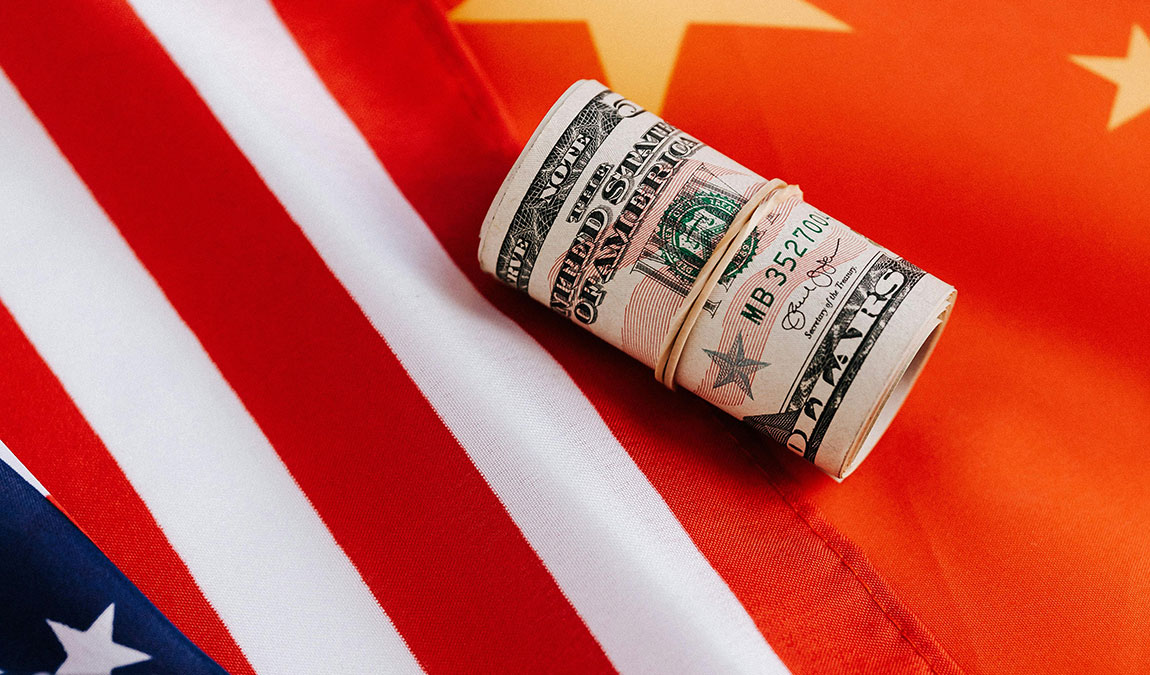
Talks between the United States and China spurred renewed optimism: a temporary trade truce was announced, with progress on cooperation over rare earths and avoidance of new tariffs.
This boosted equity markets—especially in Asia—and provided support to industrial commodities. Nevertheless, caution remains, as no final agreement has yet been signed and several conditions are still unresolved.
Implications for Investors and Suggested Instruments
Market Implications
- With rates trending slightly lower but the Fed remaining cautious, equities continue to be a preferred asset class, particularly growth and innovation-driven stocks.
- Given moderate uncertainty, diversification remains essential—avoid relying on a single “everything rallies” scenario.
- Short-term and inflation-linked bonds can act as stabilizers within a balanced portfolio.
- Commodities—especially industrial ones—may benefit from optimism about global growth and the ongoing US-China trade thaw.
ETFs Potentially Suitable for the Average Investor

Below are some ETF categories worth considering in the current environment. Risk profile, time horizon, and individual circumstances should always be evaluated.
- Global / Developed Market Equities: a broad global ETF can capture the ongoing equity momentum.
- Emerging Market Equities: these may continue to benefit from growth recovery and improving trade relations.
- Short-Term Investment-Grade Bonds: to help reduce volatility and preserve capital.
- Inflation-Linked Bonds: to hedge residual inflation risks.
- Industrial Commodities ETFs: to participate in stronger global demand and the trade détente effects.
Example Allocations (illustrative, not recommendations)
- Global equity ETF — broad-based, low-cost exposure.
- Emerging markets equity ETF — to capture potential upside.
- Short-term investment-grade bond ETF — for stability.
- Inflation-linked bond ETF — inflation protection.
- Industrial commodities ETF or diversified metals basket ETF — cyclical exposure.
Suggested Portfolio Mix (for an average saver)
- ~50% equities (global + emerging)
- ~30% bonds (short-term + inflation-linked)
- ~20% commodities / alternatives
This should, of course, be adjusted based on age, risk tolerance, and investment horizon.
Disclaimer
The information provided is for informational purposes only and does not constitute personalized financial advice or an offer to invest. Any investment decision involves risk, including possible loss of capital. Investors should carefully evaluate their financial situation, goals, and time horizon, and consult a qualified financial advisor before making investment decisions.