
Chicago’s late-2025 moves: why they were taken and how they may affect gold, silver, platinum and palladium in 2026
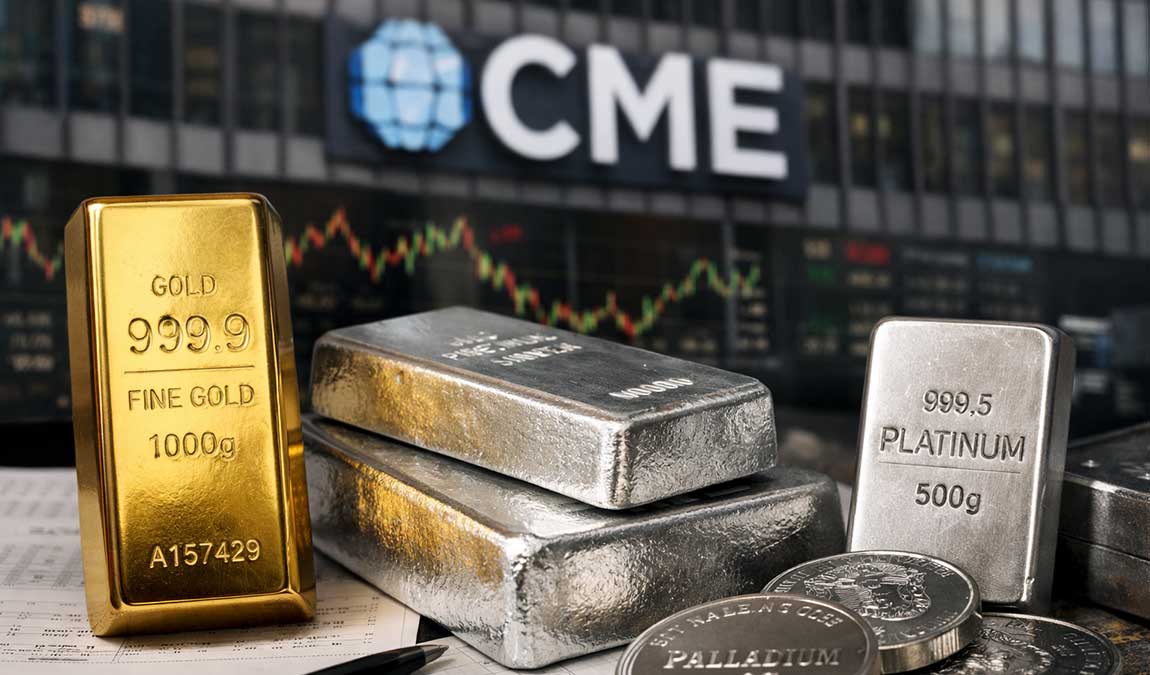
CME, higher margins shake precious metals
Chicago’s late-2025 moves: why they were taken and how they may affect gold, silver, platinum and palladium in 2026
In the strong year-end rally of precious metals markets in 2025, one piece of news stood out among market participants: the Chicago Mercantile Exchange (CME) decided to raise margin requirements on futures for gold, silver, platinum and palladium. The move, announced through official clearing house notices, came after days of extreme volatility and prompted many investors to reassess their year-end strategies.
The institutional “why” behind higher margins
Put simply, margins in a derivatives market are the cash guarantees that traders must post to open and maintain futures positions: the higher the expected volatility, the more capital is required to cover the risk of sudden price swings. In CME’s official documents, the decision is described as part of a routine review of market volatility aimed at ensuring adequate collateral coverage.
On several key contracts, the tightening was significant in percentage terms: gold margins rose by more than 9%, silver by over 30%, platinum by 25%, and palladium by roughly 22% compared with previous levels.
Market reactions: a sharp pullback from the rally
The announcement came in an already overheated price environment. In 2025, gold posted one of its strongest years since 1979, gaining more than 60% thanks to interest-rate cuts, a weaker dollar and persistent geopolitical tensions. Silver more than doubled in value, driven by strong industrial demand and supply constraints.
At record levels for both silver and gold, the margin hike pushed many investors to close positions to lock in profits or reduce exposure, contributing to a price correction: according to several market reports, spot gold fell by more than 4% in a single session, while silver dropped by nearly 9% following the news.
This was not an isolated phenomenon. Platinum and palladium also recorded declines accompanied by elevated volatility, in a context where speculative pressure and typically thin year-end trading volumes amplified price swings.
2026: between the macro backdrop and metal-specific paths
With margins now at higher levels, the precious metals asset class enters the new year with a mix of opportunities and risks. Here is how the outlook may unfold, metal by metal.
Gold – The safe haven remains in focus
After a historic rally, gold in 2026 is likely to move into a more sideways equilibrium, supported by expectations of a weaker dollar, potential further rate cuts and ongoing geopolitical tensions. Higher margins reduce leverage, which could dampen sudden swings, but they are unlikely to undermine the broader narrative of gold as a hedge against global economic uncertainty.
Silver – More volatile, more reactive
Because of its dual nature (precious metal and industrial input), silver remains prone to wide fluctuations. The late-2025 correction highlighted how sensitive it can be to risk-management moves by exchanges and highly speculative players. In 2026, industrial demand from solar energy, electronics and electric vehicles could continue to support prices, though phases of drawdowns remain possible amid profit-taking or macro shocks.
Platinum – Between cyclical demand and new applications
Platinum also posted notable gains in 2025. In 2026, its trajectory will depend on the global economic cycle and the automotive sector, as well as on emerging applications in clean-energy systems. With higher margins, traders are likely to be more selective and prepared to navigate periods of lower liquidity without excessive leverage.
Palladium – Still tied to supply dynamics and autos
Palladium delivered solid performance in 2025 but remains heavily influenced by global supply dynamics (mining and logistics) and demand for catalytic converters. With higher margins and the risk of delivery delays or production shocks, the metal could remain among the most volatile in the coming year.
A more mature market landscape
CME’s margin increases do not alter long-term fundamentals, but they push markets to be more disciplined in the use of leverage and risk. In a global environment where geopolitics, inflation, monetary policy and critical-metal supply dynamics remain central, 2026 could shape up as a year of consolidation punctuated by sporadic bursts of interest, especially during periods of market stress or economic surprise.
© 4FT Invest LTD. All rights reserved
