USA heading toward recession:risk pullback defensives
Weak labor market, declining consumption, and an inverted yield curve: even McDonald’s and Coca-Cola may suffer from the loom
USA heading toward recession: risk of pullback for defensives
Weak labor market, declining consumption, and an inverted yield curve: even McDonald’s and Coca-Cola may suffer from the looming crisis.
- McDonald`s Corp is an equity asset in the U.S. market.
- Current price: 312.8 USD, +2.4% over the past month (see previous articles)
Stock market info for Coca-Cola Co (KO)
- Coca-Cola Co is an equity asset in the U.S. market.
- Current price: 67.43 USD, -3.7% over the past month
Why defensive stocks could retrace
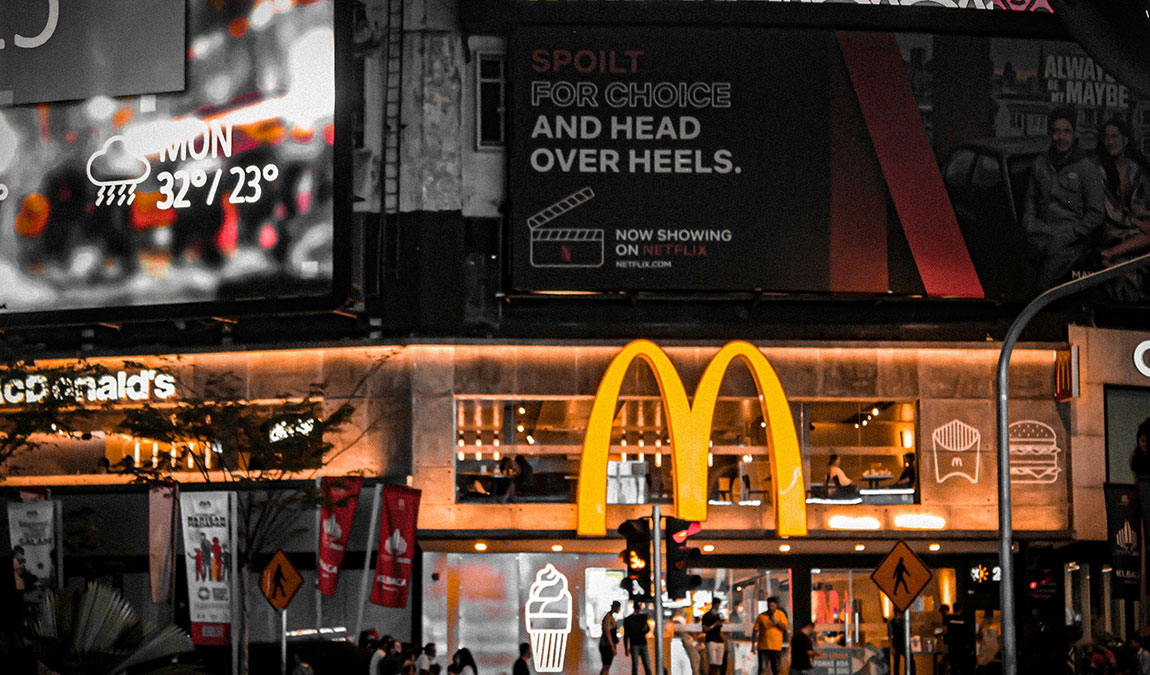
Companies like McDonald’s and Coca-Cola are historically considered safe havens thanks to steady consumer demand even during downturns. However, a potential recession can also weigh on these giants:
- Declining consumer spending: In uncertain times, households cut back—even on fast food or beverages—especially among lower-income groups.
- Margin pressures: Rising raw material costs, tariff policies, and inflation can erode profits.
- Price competition: McDonald’s relaunched its “Extra Value Meals” to attract lower-income customers—a clear sign of pressure on spending.
Heading toward recession: signals from FRED and official sources
1. Labor market under stress
- In August, only 22,000 jobs were created, well below expectations. Unemployment rose to 4.3%, the highest in nearly four years.
- Mark Zandi (Moody’s) warns that consumer spending, manufacturing, and tariff policies clearly point to recession risks.
2. Key economic indicators
- The NBER has not yet officially declared a recession, but many leading indicators show persistent weakness. Some economists estimate the probability of recession at 71%.
- The inverted yield curve—a historic predictor of recessions—has never been so prolonged and deep. Each inversion since 1970 has preceded a U.S. recession.
3. FRED recession indicators
- Smoothed U.S. Recession Probabilities provide a probabilistic estimate based on employment, industrial production, real income, and real sales.
- The Sahm Rule flags a recession when unemployment rises by at least 0.5 percentage points from its 12-month low.
- The Conference Board’s Leading Economic Indicators are also signaling a slowdown, known as the “rule of 3Ds” (diffusion index ≤ 50 and annual growth below –4.1%).
Impact on U.S. equities

- Rising volatility: Uncertainty over Fed rate cuts and weak data fuel sharp equity swings.
- Sector rotation: Investors may prefer defensive sectors—healthcare, utilities, consumer staples—while reducing exposure to cyclicals.
- Reduced flows into defensives: Even havens like MCD and KO may suffer if consumer purchasing power declines or margins tighten.
In summary
The U.S. macro environment shows clear signs of slowing: weak labor market, inverted yield curve, and leading indicators flashing red. Recessions often start quietly, as shown by FRED indicators, which are more reactive than NBER declarations. Even consumer “defensives” could face pressure if households reduce spending.
For investors, it is essential to monitor FRED data (employment, production, yield curves) and consider defensive strategies without ignoring the systemic risks ahead.