Rallentamento mercati e oro ai massimi: il segnale Q4
Mercati in rosso, rally oro, inflazione e segnali di stress: analisi macro e outlook con gli strumenti avanzati di 4FTInvest
Mercati in rallentamento e oro ai massimi: il segnale del Q4
Settimana in rosso per i mercati globali, oro in rally record, inflazione UE in risalita e segnali di stress dagli USA: analisi macro e outlook con gli strumenti avanzati di 4FTInvest.
Contesto di mercato
Venerdì 10 ottobre ha segnato una flessione importante per molti mercati finanziari, chiudendo una settimana in rosso per quasi tutti gli asset globali che si è prolungata fino alla chiusura del 17 ottobre. Questo ha suscitato attenzione tra gli operatori: un “allarme” imminente, un segnale che vale la pena monitorare con maggior cura.
Nel frattempo l’oro ha continuato un rally, presumibilmente alimentato da maggiori acquisti da parte delle banche centrali e da una domanda di protezione. Allo stesso tempo, in vari paesi si intensificano politiche protezionistiche: un segnale che spesso appare quando i governi percepiscono vulnerabilità di lungo termine — ad esempio debito elevato (cfr. USA) — e cercano di stimolare nel breve periodo.
Dati macroeconomici chiave (alcuni esempi tratti da FRED)
Ecco alcuni indicatori utili tratti dal database FRED della Federal Reserve di St. Louis:
- Federal Funds Effective Rate (EFFR / FEDFUNDS): rappresenta il tasso overnight tra banche negli USA, un riferimento per la politica monetaria. 4.22% settembre 2025, prossimo aggiornamento 20 ottobre 2025.
- Unemployment Rate (USA): tasso di disoccupazione negli Stati Uniti (serie UNRATE). 4.3 % agosto 2025, prossimo aggiornamento 7 novembre 2025.
- BCE Interest Rates (EU): rappresenta il tasso overnight tra banche in Europa, un riferimento per la politica monetaria. 1.92% settembre 2025, prossimo aggiornamento 30 ottobre 2025.
Questi dati insieme a tanti altri (es. Federal Fund Effective Rate, Global Price index all comodities, unemployement rate usa, Kansas City Financial Stress Index, New Orders Durable Goods USA, Real GDP USA, Real GDP UE, Sahm Rule Recession Indicator USA, CPI USA, CPI UE, BCE Interest Rates, PMI USA, PMI UE, …) suggeriscono un contesto in cui: tassi base relativamente elevati, disoccupazione che non punta verso un rimbalzo forte, e stress finanziario che resta su livelli da monitorare.
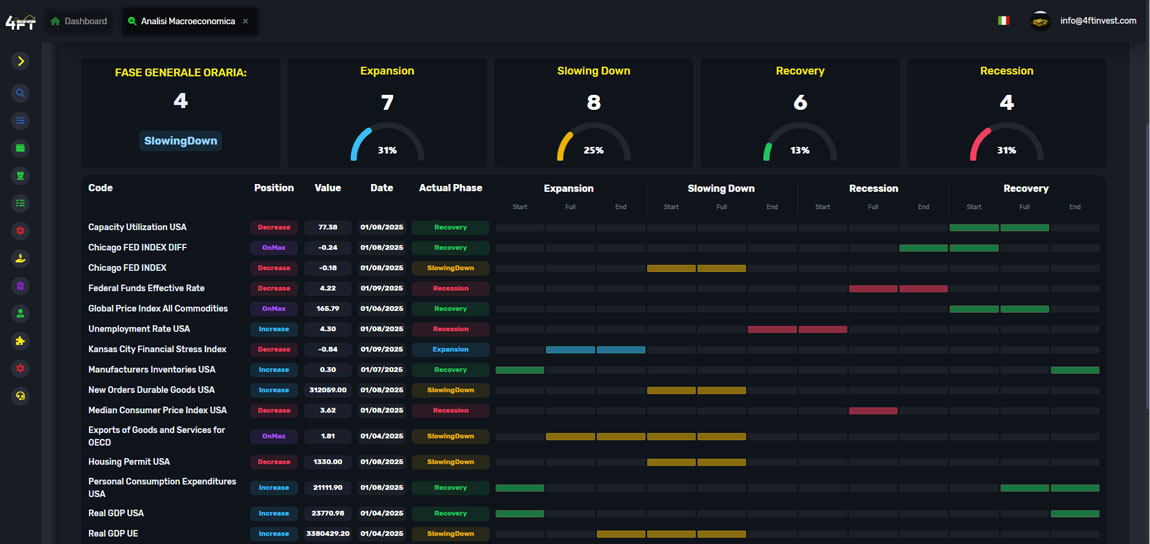
4FTinvest ha sviluppato sistemi di analisi avanzati per valutare l’andamento macroeconomico nelle sue fasi di sviluppo attraverso gli indici macroeconomici e monitorare il loro rapporto con i mercati finanziari. Come mostra l'immagine la fase attuale più probabile è un pieno rallentamento chiaramente proveniente da una fase di espansione e tendente a sviluppi recessivi nel breve-medio termine (difficile dirlo con estrema precisione, ovviamente!), con una buona robustezza del modello.
Altri elementi rilevanti
- Crisi delle banche regionali USA: nel corso dell’anno alcune banche regionali statunitensi hanno registrato perdite o tensioni legate a portafogli di titoli a tasso fisso in un contesto di rialzo dei rendimenti — questo ha alimentato timori di contagio o di restrizione del credito. Lo scorso 16 ottobre alcuni istituti infatti hanno annunciato problemi sullo stock dei crediti accentuando i timori di nuovi prestiti deteriorati. La bancarotta di due società legate al settore auto e la denuncia di frode avanzata da Western Alliance completano il quadro.
- Shutdown governativo USA: una chiusura parziale delle funzioni federali (shutdown) riduce la tempestività dei dati economici ufficiali, introduce rischi sulla fiducia e sulla spesa federale.
- Debito pubblico elevato: un paese con altissimi livelli di debito (come gli Stati Uniti) è più vulnerabile a politiche che cercano una “ripresa” a breve termine con stimoli o protezionismi, piuttosto che un percorso ordinato di riduzione del deficit.
- Politiche protezionistiche aggressive: misura che in genere segnala che i decisori percepiscono una qualche vulnerabilità competitiva o esterna. Tali misure possono però ripercuotersi negativamente sul commercio, sulla crescita globale e sui margini aziendali.
- Oro in rally: indica che gran parte del mercato sta prezzando un rischio elevato, soprattutto chi è maggiormente esposto al rischio di dover affrontare una crisi monetaria e del debito senza precedenti, ossia le banche centrali. Nel 2025 l’oro non solo ha raggiunto i massimi storici (spot 4379 lo scorso 17 ottobre) ma c’è anche da considerare che Il +56% nel 2025 YTD (10 mesi) è molto forte rispetto agli “standard recenti” dell’oro (in decenni recenti salite tipiche erano inferiori). Tenendo anche in conto che l’oro può fare anche di più (…per buoni intenditori), infatti l’attuale record rimane il +329% in soli 13 mesi segnato tra il 1978 ed il 1980 durante una fasi economiche e geopolitiche più turbolente del dopoguerra (crisi petrolifera, stagflazione USA ed Europa, crisi del dollaro, guerra Iran-Iraq, crisi degli ostaggi americani a Teheran, allarme guerra fredda USA-URSS,…)
- Rischio di fiducia: consumatore più cauto, dati economici meno brillanti con potenziale rallentamento dei ricavi aziendali.
Prospettive per il quarto trimestre
Alla luce di tutto questo, ecco due scenari possibili per l’azionario:
- Scenario base – “rallentamento”
- Rallentamento moderato, utili stabili o in leggera decrescita.
- Anche le azioni con fondamentali forti (bilanci solidi, cash flow) iniziano a subire flessioni.
- Gli investitori privilegiano qualità e selettività più che atteggiamenti speculativi generali anche se permane una coda di entusiasmo che potrebbe somigliare ad una ripresa mascherando un forte rallentamento in atto.
- Scenario peggiorativo – “rallentamento + rischio sistemico” – “recessione”
- Il rallentamento diventa più forte: dati economici deludenti, credito stretto e potenziale contagio bancario.
- Come iniziare a proteggersi: rotazione marcata verso difensivi (liquidità e bond breve termine 1-3 anni – preferibilmente credito governativo - , oro e asset “sicuri”). Bolla o no i mercati azionari stanno iniziando a sentire il peso di una responsabilità che prima o poi sarà riversata nell’economia reale a livello globale, chi non crede che alla fine le cose accadono veramente forse non ha ancora vissuto dal vivo le crisi finanziarie.
In ogni caso, la gestione dovrebbe essere più liquida e difensiva del solito, con monitoraggio delle leve chiave: tassi, credito, dati occupazionali, margini aziendali.
Ruolo di 4FTInvest.com
Per affrontare questo contesto complesso, la piattaforma 4FTInvest offre:
- Robot trading avanzati: trading algoritmico sistematico su tecnologia MetaTrader 4 e MetaTrader 5 (MT4/MT5), progettata per offrire un’esperienza di trading completamente automatizzata, sicura e guidata in ogni fase.
- VPS per trading professionale.
- Tool di analisi avanzati: indici di stress, correlazioni, strumenti di visualizzazione che aiutano a interpretare il contesto macro-finanziario. A breve disponibile in abbonamento
- Servizi integrati per l’analisi dei mercati finanziari, utili per chi vuole operare in un ambiente dove la complessità è elevata. A breve disponibile in abbonamento
Disclaimer
Questo articolo ha finalità esclusivamente informative e didattiche. Non costituisce in alcun modo consulenza finanziaria, raccomandazione o sollecitazione all’investimento. Le decisioni operative richiedono una valutazione autonoma degli obiettivi, del profilo di rischio e dell’orizzonte temporale.