
Tech recovery reignites debate: overreaction or market still vulnerable?
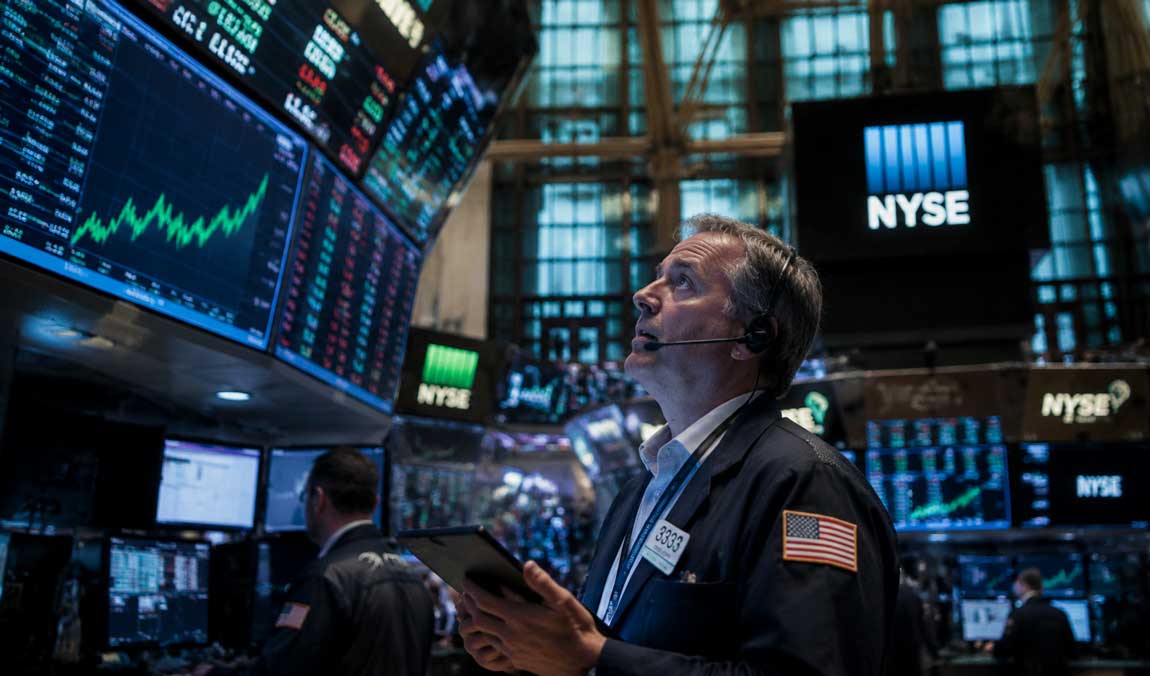
The week opened with a significant signal for Wall Street: after Friday’s sharp sell-off, the Nasdaq Composite regained ground, closing Monday up 0.9% at 25,929.66 points. The S&P 500 also rose by 0.3%, while the Dow Jones closed slightly lower, down 0.2%.
The move immediately reignited the debate among investors: was last week’s drop a classic overreaction to macroeconomic news, or the first sign of a deeper fragility?
As often happens in markets, the answer is not binary. The rebound clearly indicates that investors have not abandoned the technology theme and that the willingness to buy on dips remains. However, stabilization is still fragile because the factors that triggered the correction have not disappeared: high interest rates, rising bond yields, stretched valuations, and ongoing geopolitical tensions.
Nasdaq recovers, but market remains selective
Monday’s rebound was driven primarily by the technology and semiconductor sectors—the same sectors that had suffered the sharpest losses in the previous session.
After Friday’s drop, investors returned to buying select AI, chip, and memory-related stocks. Intel and Micron posted significant gains of around 11% and 10% respectively, while the semiconductor ETF recovered nearly 6%.
This is an important signal, showing that the market has not yet broken with the AI narrative. Many operators interpreted the sell-off as a violent yet potentially healthy correction within an otherwise structurally positive trend.
The Nasdaq is up more than 11% year-to-date, while the S&P 500 has gained about 8%. Even the Russell 2000, the small-cap index, shows a positive performance of over 15% in 2026.
However, the rebound was not uniform. Breadth, i.e., the extent of participation in the rally, remains an important factor to monitor. When a few stocks drive the recovery while the rest of the market lags, the signal is less robust compared to a broad-based rebound.
The real issue: the bond market
The main cause of Friday’s correction was the strong U.S. labor report: 172,000 new jobs added in May, roughly double expectations. Positive for the real economy, but negative for rate expectations.
The market’s reasoning is simple: if the U.S. economy remains too strong, the Federal Reserve has less room to cut rates and may even be forced to maintain a restrictive stance for longer.
The 10-year Treasury yield rose to around 4.56%, a level that continues to weigh on growth stock valuations. For technology companies, whose value depends heavily on expected future earnings, higher rates make multiples harder to justify.
This is the key point: the Nasdaq’s rebound does not erase the cost-of-money problem. As long as yields remain elevated, any recovery in tech will be subject to sudden profit-taking.
Overreaction or rational repricing?
The early-week recovery suggests the market may have overreacted to the combination of labor data, chip sector sell-offs, and Fed fears. The fact that investors quickly returned to previously penalized stocks indicates confidence in the AI cycle remains.
Yet calling it a simple overreaction would be reductive.
The sell-off revealed real fragility: tech valuations have become extremely sensitive to any change in rate expectations. When a market is concentrated in a few large names and one dominant narrative, any macro surprise can generate amplified moves.
In other words, the market is stabilizing, but on foundations still exposed to external shocks.
Oil: geopolitics still center stage
Beyond the Nasdaq, oil remains under close watch.
The start of the week saw renewed tensions between Iran and Israel, initially pushing crude higher. Brent closed Monday around $94.25 per barrel, up 1.2%, while WTI settled near $91.40, up roughly 1%.
The move was less violent than early session gains, as prices partially retraced following signals of a potential halt to hostilities.
Oil remains a key variable for three reasons:
Inflation: Crude consistently above $90 per barrel can fuel further price pressures, complicating the Fed’s path to a softer policy.
Corporate margins: Higher energy costs mean increased expenses for transportation, industry, and consumers.
Sentiment: Any escalation in the Middle East tends to shift capital to defensive assets and reduce risk appetite.
For now, oil is not signaling panic but remains at levels that could threaten equity market balance.
Gold: safe haven under yield pressure
Gold’s behavior is particularly noteworthy.
In theory, geopolitical tensions and equity volatility should favor the precious metal. Yet gold has shown more complex dynamics: Monday futures fell about 0.3% to around $4,350 per ounce, while Tuesday saw a recovery to $4,340, up roughly 0.5% intraday.
Importantly, gold remains down over 8% in the past month, yet up more than 30% year-to-date.
This apparent paradox is explained by the stronger dollar and rising yields. As Treasury yields increase, holding gold becomes relatively less attractive because the metal offers no coupons or interest.
Gold thus remains supported by structural factors such as geopolitics and protection demand, but in the short term faces a less favorable monetary environment.
What the market is telling us this week
The key message is clear: investors are not abandoning risk but becoming more selective.
The Nasdaq’s recovery shows the AI theme remains central, and many operators still view dips as entry opportunities. Yet the rebound alone does not signify the end of instability.
Upcoming macro data will be decisive, particularly inflation metrics. Should CPI and PPI confirm stronger-than-expected price pressures, the market could quickly price in a more restrictive Fed.
Conversely, moderate data could support further recovery, especially in sectors hit hardest by the correction.
Conclusion: stabilization yes, but not normalcy
Early-week reactions suggest last week’s Nasdaq drop was at least partly an overreaction. The market demonstrated the ability to absorb the shock and quickly return to high-growth themes, particularly semiconductors and AI.
But stabilization does not equal normalcy.
The landscape remains dominated by three variables: bond yields, oil, and tech valuation sustainability. If these remain under control, the rebound can consolidate. If oil and yields rise together, the Nasdaq’s recovery risks becoming a temporary pause.
For investors, discipline is key: avoid emotional interpretations, monitor the reaction of leading sectors, and distinguish between physiological volatility and structural deterioration.
The market has not stopped believing in technology. It has simply started asking for a more reasonable price to buy it.
© 4FT Invest LTD. All rights reserved
