
Between the tech sell-off, geopolitical tensions and macro data, markets are assessing opportunity or more complex phase
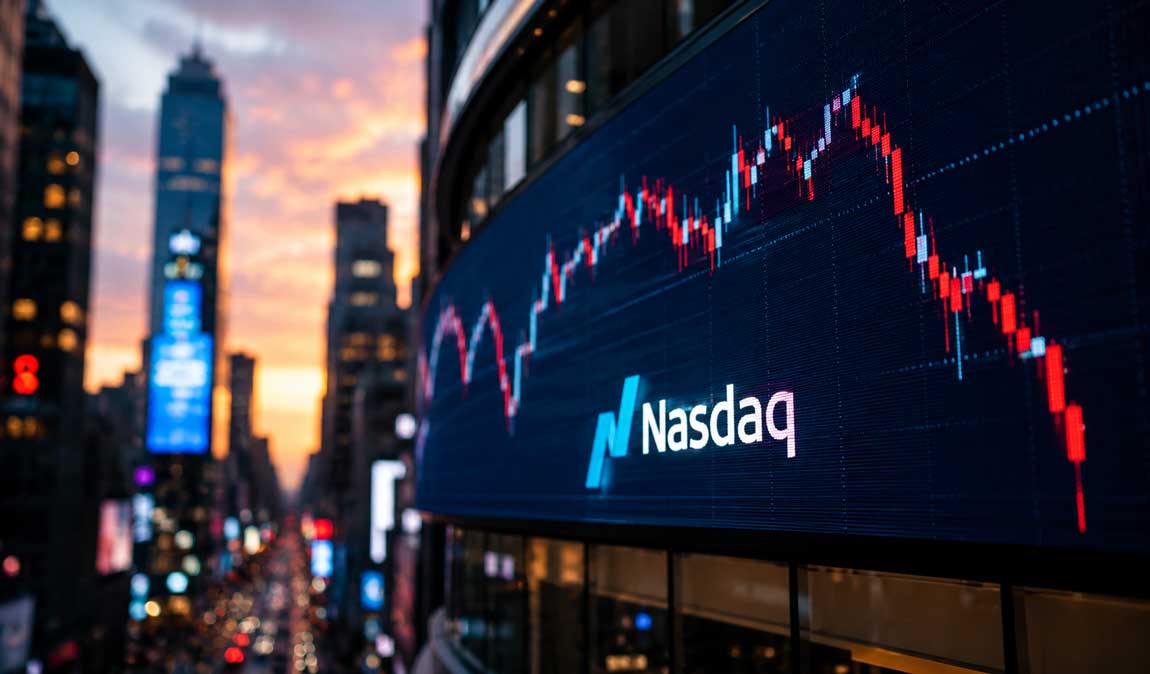
Nasdaq Under Pressure: Correction or Pause in the AI Cycle?
Between the tech sell-off, geopolitical tensions and macro data, markets are assessing whether the pullback is an opportunity or the start of a more complex phase.
After weeks dominated by one of the strongest rallies in recent years, the Nasdaq entered the final week of June in a markedly different environment. The U.S. technology sector is coming off a broad-based sell-off that has particularly affected semiconductors, artificial intelligence infrastructure companies and high-growth mega-cap names, bringing a key question back into focus for investors: is this merely profit-taking, or the beginning of a deeper correction?
As of June 29, the outlook remains open, but several factors suggest that the recent market action is more consistent with a healthy consolidation phase than with a structural change in the long-term trend.
The Asian Session Brings Caution, Not Panic
The week began with an Asian trading session characterized by a moderate recovery in risk appetite. Futures on major U.S. equity indices showed signs of stabilization as investors reassessed the likelihood of a further geopolitical escalation in the Middle East.
Markets continue to closely monitor developments in the confrontation between the United States and Iran, a factor that has significantly increased volatility across asset classes in recent weeks. Concerns are primarily centered on the potential impact on energy prices and, indirectly, on global inflation expectations.
A sustained rise in oil prices would have immediate implications for the outlook of U.S. monetary policy, reinforcing the possibility that the Federal Reserve may be forced to maintain restrictive financial conditions for longer than previously anticipated.
For the Nasdaq, which remains particularly sensitive to Treasury yield movements, this represents one of the most significant downside risks.
Why the Technology Sector Corrected
The sell-off experienced during the second half of June was not triggered by a single event, but rather by the interaction of several factors.
First, markets are confronting elevated valuations after more than a year of exceptional gains driven by the artificial intelligence theme. Major technology companies have priced in highly ambitious expectations for future growth, leaving little room for disappointment.
Second, investors are increasingly focused on the economic sustainability of the massive capital expenditures required to build AI infrastructure, data centers and computing capacity. While the long-term outlook remains positive, some market participants are beginning to question the timeline for monetizing these investments.
This has coincided with a recent rise in U.S. Treasury yields, which tends to compress valuation multiples for growth companies and increase the opportunity cost of equity investments relative to fixed income.
The result has been a wave of profit-taking concentrated in the largest capitalization stocks, amplified by the significant speculative positioning accumulated during previous months.
The Market Turns Its Attention to the Federal Reserve
The current week represents an important test for redefining expectations regarding the future path of U.S. interest rates.
Investors are awaiting a series of economic releases capable of significantly influencing market sentiment.
On Tuesday, the JOLTS Job Openings report and consumer confidence figures will be published.
Wednesday will bring the ISM Manufacturing Index, while the key event of the week has effectively been brought forward to Thursday with the release of the U.S. employment report, including Non-Farm Payrolls, the unemployment rate and wage growth figures.
With markets closing early ahead of Independence Day celebrations, most of the week's volatility is expected to be concentrated between Wednesday and Thursday.
Employment data stronger than expected could fuel another rise in government bond yields and trigger further profit-taking in technology stocks. Conversely, clearer signs of economic slowing could quickly revive expectations of a more accommodative monetary policy stance in the second half of the year.
Technical Analysis Suggests an Orderly Correction
From a technical perspective, the Nasdaq is currently undergoing a rebalancing phase following an exceptionally strong rally.
The key factor to monitor in the coming sessions will be the index's ability to stabilize near the high-volume areas created during the recent sell-off.
A recovery above the weekly VWAP would represent an initial indication of renewed institutional demand, while maintaining prices above the Point of Control established during the recent distribution phase could support a resumption of the broader uptrend.
Failure to reclaim these levels, however, would increase the risk of an extension of the correction toward deeper support zones.
At present, there is insufficient evidence to suggest a structural reversal of the longer-term trend.
Corporate earnings continue to demonstrate resilience, the U.S. economic cycle remains in expansion territory, and artificial intelligence investments still occupy a central role in the growth strategies of leading technology companies.
Tactical Correction or Regime Shift?
The dominant question as the second half of 2026 begins remains unchanged: is the Nasdaq merely experiencing a consolidation phase, or is the market starting to reassess the growth paradigm built around artificial intelligence?
At present, the prevailing view remains that this is a technical correction within a broader uptrend that is still intact.
However, macroeconomic sensitivity, geopolitical uncertainty and U.S. monetary policy will continue to represent the primary variables capable of shaping market direction over the coming weeks.
For investors, the challenge will be distinguishing short-term volatility from a genuine deterioration in underlying fundamentals.
As long as economic growth remains positive and the artificial intelligence narrative continues to generate investment, innovation and productivity gains, the Nasdaq may ultimately view the current phase not as the end of the bull cycle, but as a necessary pause before the next leg higher.
© 4FT Invest LTD. All rights reserved
