Geopolitics and rates drive the downturn
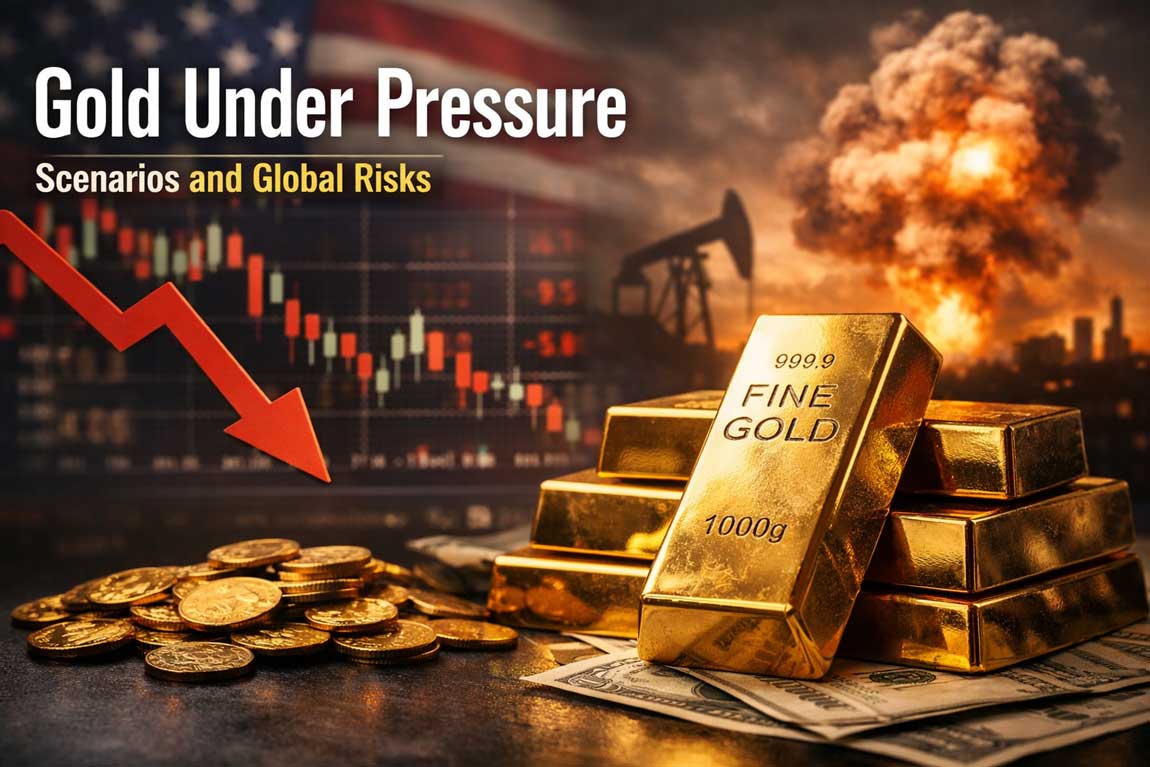
Gold under pressure: scenarios and global risks
Geopolitics and rates drive the downturn
Gold is slipping decisively into “bear market” territory, breaking an equilibrium that for months had supported the yellow metal as a safe-haven asset. The recent decline— with prices falling to around $4,335 per ounce— is not just a technical move, but the reflection of a deeper shift in the global macro-financial environment.
Behind the correction lies a combination of structural factors: a strong dollar, high yields, and a repositioning by investors that is reshaping the very role of precious metals in portfolios.
The geopolitical paradox: high tensions, weak gold
Traditionally, gold benefits from geopolitical crises. However, the current phase presents an apparent anomaly: persistent global tensions alongside falling prices.
Areas of instability—from conflicts in Eastern Europe to tensions in the Middle East and rivalries between the United States and China—are not triggering the classic “flight to safety.” This is happening for three main reasons:
In other words, the safe-haven role has not disappeared, but it has evolved.
High rates and liquidity: the real driver of the decline
The dominant factor remains monetary policy. Central banks, led by the Federal Reserve, are maintaining restrictive financial conditions longer than expected.
This generates two key effects:
The result is a gradual unwinding of positions, also visible in outflows from gold-backed ETFs.
Private equity: the hidden risk
An increasingly relevant factor is the fragility of the private equity sector. Rising interest rates have impacted:
This scenario recalls, in terms of leverage and liquidity dynamics, the Global Financial Crisis of 2008, albeit in a less visible form.
If systemic stress were to emerge—defaults, IPO freezes, credit tightening—gold could quickly regain its leading role.
Views from major banks
Leading investment houses maintain a cautious but not negative medium-term outlook:
Six-month outlook: three possible paths
1. Base scenario (most likely)
2. Bearish scenario
3. Bullish (event-driven) scenario
How sophisticated investors are positioning
In this complex environment, many investors are moving away from purely directional strategies toward more dynamic approaches:
Among emerging solutions, algorithmic trading—such as that developed by 4ftinvest.com—stands out, enabling rapid adaptation to market changes through data, statistical models, and automation.
Operational takeaway
Gold’s decline is not a sign of structural weakness, but the result of a context dominated by tight liquidity and elevated yields. However, geopolitical tensions and financial fragilities remain latent and could quickly restore gold’s safe-haven appeal.
For investors, the key in the coming months will be flexibility: combining macro vision, risk management, and advanced tools—including algorithmic systems—to navigate an increasingly complex market phase.
The information contained in this article is for informational purposes only and does not constitute financial advice, investment solicitation, or trading recommendations. Any investment decision is the sole responsibility of the investor.
© 4FT Invest LTD. All rights reserved
