Oil, gold and Nasdaq come under pressure again as the week opens with geopolitics and the Fed in focus.
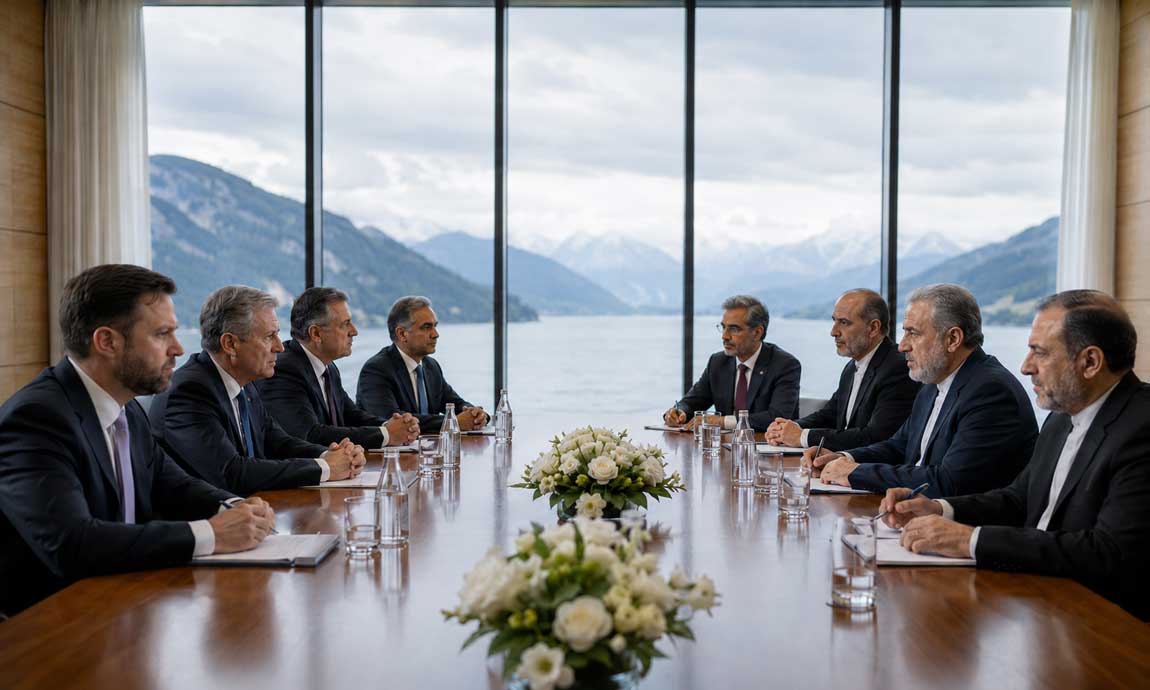
Hormuz Brings Risk Back to Markets
Oil, gold and Nasdaq come under pressure again as the week opens with geopolitics and the Fed in focus.
The new trading week opens with a clear shift in market conditions compared with the more constructive tone that had emerged only a few days earlier. The partial reopening of the Strait of Hormuz had supported a recovery in risk assets, reduced the geopolitical premium on oil and triggered a correction in gold. The news on June 21, however, brings Middle East risk back to the center of market attention: Tehran has linked the reopening of the Strait to compliance with the ceasefire in Lebanon and the granting of waivers for Iranian oil sales, while negotiations with the United States have deteriorated again following Donald Trump’s threats.
Markets therefore enter Monday, June 22 with three assets to monitor closely: oil, gold and Nasdaq. Oil is the immediate barometer of risk around Hormuz; gold measures the return of demand for protection; Nasdaq shows how much tolerance equity markets still have for a new energy shock in an environment already complicated by a more restrictive Federal Reserve.
The Geopolitical Picture: Hormuz Back in Focus
The key issue is not only whether the Strait of Hormuz is formally closed or open, but the operational credibility of the blockade. On Friday, some tankers had transited through the area and the market had started to price in a gradual normalization of flows. However, the conditions set by Tehran change the perception of risk: if every transit were to depend on permits, checks or political negotiations, the oil premium could rise quickly again.
The Strait of Hormuz remains one of the most important energy chokepoints in the world. A prolonged disruption, or even uncertain navigation, can directly affect crude prices, inflation expectations, rate expectations and equity sentiment. Markets are therefore not only watching diplomacy, but also concrete data: the number of vessels in transit, insurance premiums, shipping company statements, the behavior of Gulf producers and the response from the United States, Iran and Israel.
The suspension of U.S.-Iran talks adds a second variable. Diplomacy is not completely dead, but the process has weakened. For investors, this means a greater probability of opening gaps, impulsive moves and above-average volatility in the first hours of trading.
Oil: The First Asset to Watch
Oil will probably be the first market to absorb the new risk. On Friday, Brent was trading around 80 dollars per barrel after a week still marked by a sharp decline linked to expectations of normalized flows. The news of a renewed closure, or a conditional reopening of Hormuz, could quickly reactivate the geopolitical premium.
The first area to watch on Brent is 80 dollars. As long as price remains above this threshold, the market is signaling that the risk has not been fully absorbed. A bullish breakout of 82.50-83 dollars would increase the probability of an extension toward 85 dollars, a key psychological and short-term technical level. Above 85 dollars, the market would begin to price in a more serious supply-risk scenario, with possible acceleration toward 88-90 dollars.
On WTI, the immediate reference is the 77-78 dollar area. A recovery above 80 dollars would be the first sign of renewed energy risk. Above 82-83 dollars, the move could become more directional, with subsequent targets toward 85 dollars.
The main risk is an upside gap followed by strong volatility. If the market discovers that the blockade is more political than operational and that traffic continues, oil could retrace quickly. If, on the other hand, real transit difficulties emerge, insurance costs rise or indirect military interventions occur, the rally could consolidate.
Brent levels to monitor:
Supports: 80.00; 78.50; 76.50 dollars
Resistances: 83.00; 85.00; 88.00-90.00 dollars
WTI levels to monitor:
Supports: 77.00; 75.50; 73.80 dollars
Resistances: 80.00; 82.50; 85.00 dollars
Gold: Geopolitical Premium Returns, but the Fed Still Weighs
Gold comes into the week from a technically weak position. The metal lost ground for the third consecutive week, penalized by a strong dollar, expectations of higher rates and a more restrictive tone from the Federal Reserve. This financial backdrop remains unfavorable: a strong dollar and elevated yields increase the opportunity cost of holding an asset that does not generate income.
The weekend news, however, makes the geopolitical premium relevant again. If Hormuz remains closed or if negotiations deteriorate further, gold could recover part of the safe-haven component that had been priced out in recent sessions. The key question will be whether the market reads the crisis as a systemic risk or as an inflationary shock. In the first case, gold tends to benefit. In the second, higher oil prices can support the dollar and yields, limiting the metal’s recovery.
From a technical perspective, the first key area remains 4,100-4,120 dollars. Holding this support is essential to avoid a new bearish leg. A credible rebound would need to bring gold back above 4,185-4,200 dollars. This is the first real recovery zone: below it, any rally remains fragile and could simply be short covering.
The most important signal would come above 4,225-4,245 dollars. A close above this area would turn the move from a simple rebound into an attempt at stabilization. In that case, the next targets would become 4,280-4,300 dollars and, in the event of a more pronounced escalation, 4,350 dollars.
Conversely, if gold fails to rise despite the Hormuz news, the signal would be very negative. It would mean that the dollar, the Fed and yields are still dominating the geopolitical component. A confirmed break below 4,100 dollars would open space toward 4,050 dollars and then toward the psychological threshold of 4,000 dollars.
Gold levels to monitor:
Supports: 4,120-4,100; 4,050; 4,000 dollars
Resistances: 4,185-4,200; 4,225-4,245; 4,280-4,300; 4,350 dollars
Nasdaq: The Test Is the Cost of Energy
Nasdaq enters the new week after benefiting from the previous risk-on environment. Lower oil prices, the prospect of Hormuz reopening and optimism around geopolitical stabilization had supported technology stocks and growth assets. Now the picture changes: if oil starts rising again, the market will have to recalibrate inflation expectations, corporate margins, real rates and risk appetite.
Nasdaq is particularly sensitive to two variables: U.S. yields and global sentiment. A rise in oil above 85 dollars, combined with a strong dollar and higher yields, would be an unfavorable scenario for technology stocks. Conversely, if the Hormuz crisis is perceived as manageable and oil does not accelerate beyond the first resistance levels, Nasdaq could be limited to a technical correction.
As an operational reference, QQQ can be used as a liquid proxy for the Nasdaq 100. The last available close was around 740 dollars, with an intraday high near 742 and a low around 732. The first area to monitor is therefore 732-735: holding this zone would keep the short-term bullish structure intact. A break, instead, would open space toward 725 and then 715-710.
On the upside, a recovery above 742-745 would be the first sign of strength. Above 750, the market could attempt a new acceleration, but only if oil and yields do not confirm a stress scenario.
The risk for Nasdaq is not only geopolitical. It is mainly macro-financial: if Hormuz generates higher oil prices, higher oil prices generate inflation expectations, and inflation expectations reinforce the idea of a tougher Fed. In this chain, Nasdaq is the asset most exposed to multiple compression.
Nasdaq/QQQ levels to monitor:
Supports: 732-735; 725; 715-710 dollars
Resistances: 742-745; 750; 758-760 dollars
The Key Correlation: Oil Up, Gold and Nasdaq Diverge
The coming week could be dominated by a clear correlation: oil higher, gold supported but volatile, Nasdaq under pressure. However, gold and oil may not necessarily rise together in a linear way. If the rise in crude is interpreted as a geopolitical shock, gold can benefit from flight-to-safety flows. If it is instead interpreted as a pure inflationary shock, support for gold may be limited by the dollar and yields.
Nasdaq, by contrast, has less room for ambiguity. Brent stabilizing above 85 dollars and rising diplomatic tensions would be negative factors for technology stocks. A drop in Brent below 80 dollars, on the other hand, would ease pressure and could support stabilization in equity futures.
In summary, markets will be watching three questions:
Is Hormuz truly closed, or only politically restricted?
Does oil break above 85 dollars, or remain under control?
Can gold recover 4,200-4,245 dollars despite the Fed and the dollar?
The answers to these three questions will define the direction of the week.
Main Scenario for Monday, June 22
The most likely scenario is a volatile start to the week, with an initial risk-off reaction. Oil could open supported, gold could attempt a rebound and Nasdaq could face profit-taking. The quality of the move, however, will depend on confirmation during the first European hours and then the U.S. session.
For oil, the most important level is 85 dollars on Brent. For gold, the decisive range is 4,200-4,245 dollars. For Nasdaq/QQQ, the first critical support is 732-735 dollars.
If Brent breaks above 85, gold moves above 4,245 and QQQ loses 732, the market would be pricing in a real return of geopolitical risk. If, instead, Brent remains below 83-85, gold fails to recover 4,200 and QQQ holds support, the move could prove to be an initial panic reaction destined to fade.
The week, therefore, does not begin with a simple geopolitical headline, but with a new test of the balance between energy, rates and risk. Oil, gold and Nasdaq will be the three clearest instruments for understanding whether the market is entering a new phase of stress or simply facing a temporary volatility episode.
Disclaimer
This content is for informational purposes only and does not constitute financial advice, investment solicitation or a personalized recommendation. Trading financial instruments, CFDs, futures, commodities, indices and currencies involves a high risk of capital loss. Past performance, whether real or simulated, is not indicative of future results. Each investor should carefully assess their financial situation, risk profile and, where necessary, consult a licensed financial advisor before making any trading or investment decisions.
© 4FT Invest LTD. All rights reserved
